
How Much Does a Vet Charge for Writing a Prescription?
Most vets charge a prescription writing fee between $10 and $50 per script, with $25 being common. The fee covers the veterinary exam, professional judgment, and administrative work required to legally prescribe medication.
How much does a vet charge for writing a prescription? Typical fees explained
When budgeting for your pet's care, it helps to know what a prescription writing fee typically covers and what it might cost. At our hospital, we aim to be transparent about these fees so you can plan ahead.
| Factor | Why It Matters | Typical Range |
|---|---|---|
| Prescription writing fee | This covers the veterinarian's time to review your pet's medical history, assess current health, and determine the appropriate medication and dosage. | Varies by clinic; generally a modest flat fee per prescription |
| Repeat prescription fee | Some clinics charge a lower fee for refills if the pet has been seen recently, while others may require a new exam. | Often less than the initial fee, but varies |
| Medication type | Controlled substances or medications requiring special handling may involve additional paperwork or monitoring. | May be higher than standard prescriptions |
| Clinic location | Fees can differ between urban and suburban areas due to overhead costs. | Varies by region |
| Online pharmacy requests | If you ask the vet to send a prescription to an online pharmacy, some clinics charge a fee for the administrative work. | Varies; ask your clinic for details |
Because fees vary widely, we recommend calling your veterinarian directly for a quote. At The Pet Hospital of La Mesa, we provide a clear breakdown of any charges before you proceed.



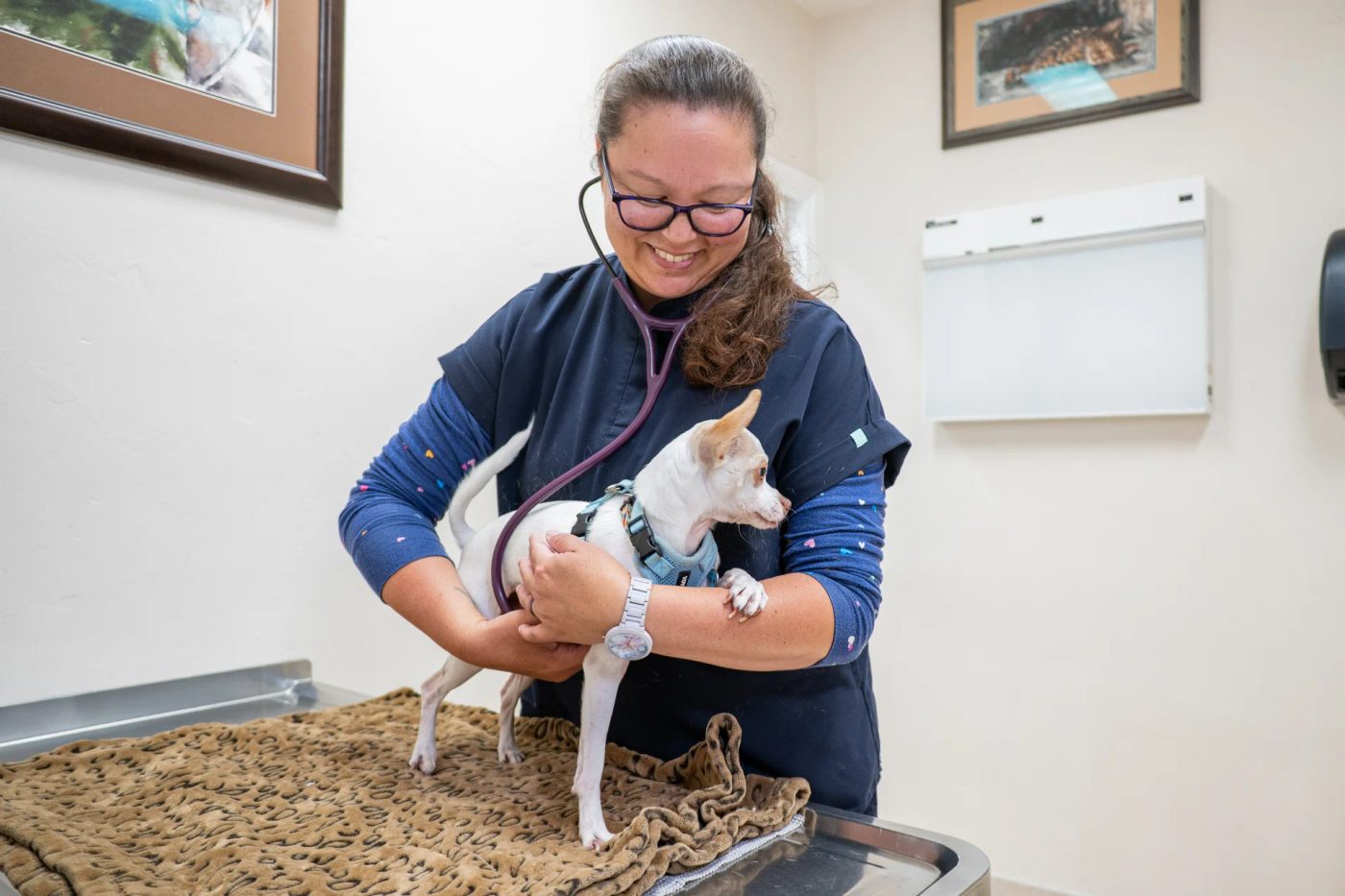

How to get a vet prescription without overpaying: steps and tips
Follow these steps to minimize the prescription writing fee while still getting the medication your pet needs.
- Schedule a wellness exam – Most vets require an exam within the past year to prescribe. At The Pet Hospital of La Mesa, new clients receive a free first exam (terms apply), which can reduce overall costs.
- Ask for a written prescription – Request a paper script you can take to any pharmacy. This gives you the freedom to compare prices at online pet pharmacies (e.g., Chewy, VetsterRx) or local drugstores.
- Compare prices – Call or check online for the cost of the same medication at different pharmacies. Include the prescription fee in your total calculation.
- Consider a mail-order pharmacy – Some online services offer lower prices for 90-day supplies. Factor in shipping time and any additional fees.
- Check pet insurance – If you have coverage, see if prescription fees are reimbursable. Some plans cover a portion of medication costs.
- Ask about discounts – Some clinics offer loyalty programs or discounts for seniors, military, or multiple pets. Inquire politely.
For more on affordable options, see our guide on San Diego affordable veterinary care.
Can a vet charge for writing a prescription? Your rights and the law
Yes, it is legal for a veterinarian to charge a fee for writing a prescription. This fee, often called an administrative fee or prescription writing fee, covers the time and expertise required to evaluate your pet's health, determine the correct medication and dosage, and complete the legal documentation. Veterinarians are not required to provide prescriptions for free, just as doctors are not required to write scripts without a consultation.
Your rights include: you can request a written prescription (instead of having the vet dispense the medication), and you can fill it at any licensed pharmacy—online or local. However, the vet must have a valid veterinarian-client-patient relationship (VCPR) to prescribe, which typically means your pet has been examined within the past year. If you haven't visited in a while, an exam is legally required before any prescription can be written.
If you feel a fee is excessive, you can ask for an itemized explanation. Most clinics are transparent about their fees. For more on understanding vet costs, see why veterinarian bills are so expensive.
Vet prescription vs. online pharmacy: which saves you more?
Deciding whether to buy your pet's medication directly from your veterinarian or through an online pharmacy involves weighing convenience, cost, and safety. Below is a comparison to help you make an informed choice.
| Option | Pros | Cons |
|---|---|---|
| Buy from your vet | Immediate availability; medication is verified by your vet; no additional prescription fee; professional guidance on use and side effects | May be more expensive than online options; limited to in-stock medications |
| Online pharmacy | Potential cost savings; wider selection; home delivery | Requires a prescription from your vet (may incur a fee); shipping delays; risk of counterfeit products if not from a reputable source |
A good fit if…
- You need the medication immediately and want professional oversight.
- Your vet's price is competitive or you have a wellness plan that includes discounts.
Consider another option if…
- You have time to wait for delivery and can save significantly online.
- Your pet requires a long-term medication where bulk ordering reduces cost.
To decide, ask your vet for a price quote on the medication and compare it with online prices after factoring in any prescription fee. At our practice, we are happy to provide a written prescription for you to use at any pharmacy you choose.
Medicare Prescription Drug, Improvement, and Modernization Act
The Medicare Prescription Drug, Improvement, and Modernization Act (MMA) is a 2003 U.S. federal law that significantly changed Medicare, the health insurance program for people aged 65 and older and certain younger individuals with disabilities. Its main goal was to add a prescription drug benefit (Part D) to Medicare, helping seniors afford medications. The law also expanded preventive services and introduced health savings accounts. While the MMA does not directly apply to veterinary medicine, it illustrates how prescription drug costs and coverage are complex even for human healthcare. For pet owners, understanding that prescription fees exist in both human and veterinary medicine can help you budget and ask informed questions about your pet’s medication costs.
Directions to our veterinarian in La Mesa from Lake Murray
Start at Lake Murray and head to The Pet Hospital of La Mesa at 5336 Jackson Dr, La Mesa, CA 91942.
Low-cost vet prescriptions: options when money is tight
If you're struggling to afford the prescription fee, consider these strategies:
- Ask about a waiver or discount. Some clinics, including The Pet Hospital of La Mesa, may reduce or waive the fee for established clients or those with financial hardship. It never hurts to ask.
- Use a low-cost clinic. Check for community clinics or non-profit organizations that offer reduced-fee exams and prescriptions. See our list of low-cost and free veterinary care in La Mesa.
- Apply for pet insurance. Some policies cover prescription fees and medication costs. Compare plans that include prescription coverage.
- Ask for a generic alternative. If a brand-name drug is prescribed, ask if a generic version is available—it can be significantly cheaper.
- Split the script. If your pet needs a long course, ask if the vet can write a prescription for a larger quantity to reduce the per-dose cost.
Remember, never skip or ration your pet's medication without consulting a vet. For emergency situations, see what to do if a pet has an emergency at night.
Sources
Also asked as
- What is the typical fee for a vet prescription?
- How much does a repeat prescription cost at a vet?
- Is there a charge for a written prescription from a vet?
Frequently asked questions
How much does a vet charge for a repeat prescription?
Repeat prescription fees are often lower than the initial script, typically $10–$25 per refill. However, many vets require an exam every 6–12 months to continue prescribing, so the exam fee may apply again.
Is vet school 3 years or 4 years?
Veterinary school in the United States is typically a 4-year program after completing a bachelor's degree. Some accelerated programs may be 3 years, but 4 years is the standard.
Can a vet write a prescription for a human?
No, veterinarians are licensed to prescribe only for animals. They cannot legally write prescriptions for humans.
What is the most common complaint in a veterinary clinic?
The most common complaints are skin issues (allergies, infections), ear infections, gastrointestinal problems (vomiting, diarrhea), and dental disease. These often require medication that may need a prescription.
How do you tell if you have a bad vet?
Signs of a poor-quality vet include lack of clear communication, pressure to buy unnecessary services, refusal to provide a written prescription, and unclean facilities. Trust your instincts and seek a second opinion if you're uncomfortable.