
What Is a Comprehensive Exam for Dogs? A Complete Guide
A comprehensive exam for dogs is a thorough, preventive checkup that includes a nose-to-tail physical, review of medical history, vaccinations, parasite screening, dental assessment, and often blood work to establish baseline health values and catch issues early.
What Happens During a Comprehensive Dog Exam?
A comprehensive exam for dogs is a methodical, head-to-tail checkup. Here is what your dog can expect during a visit to The Pet Hospital of La Mesa.
- History and discussion — Your vet will ask about your dog's diet, behavior, activity level, thirst, urination, and any changes since the last visit. This conversation helps guide the rest of the exam.
- Vital signs check — Temperature, heart rate, respiratory rate, and body condition score are recorded. These baseline numbers are essential for tracking health over time.
- Head and neck exam — The vet examines eyes, ears, nose, mouth, teeth, and lymph nodes. They check for discharge, redness, tartar, lumps, or pain.
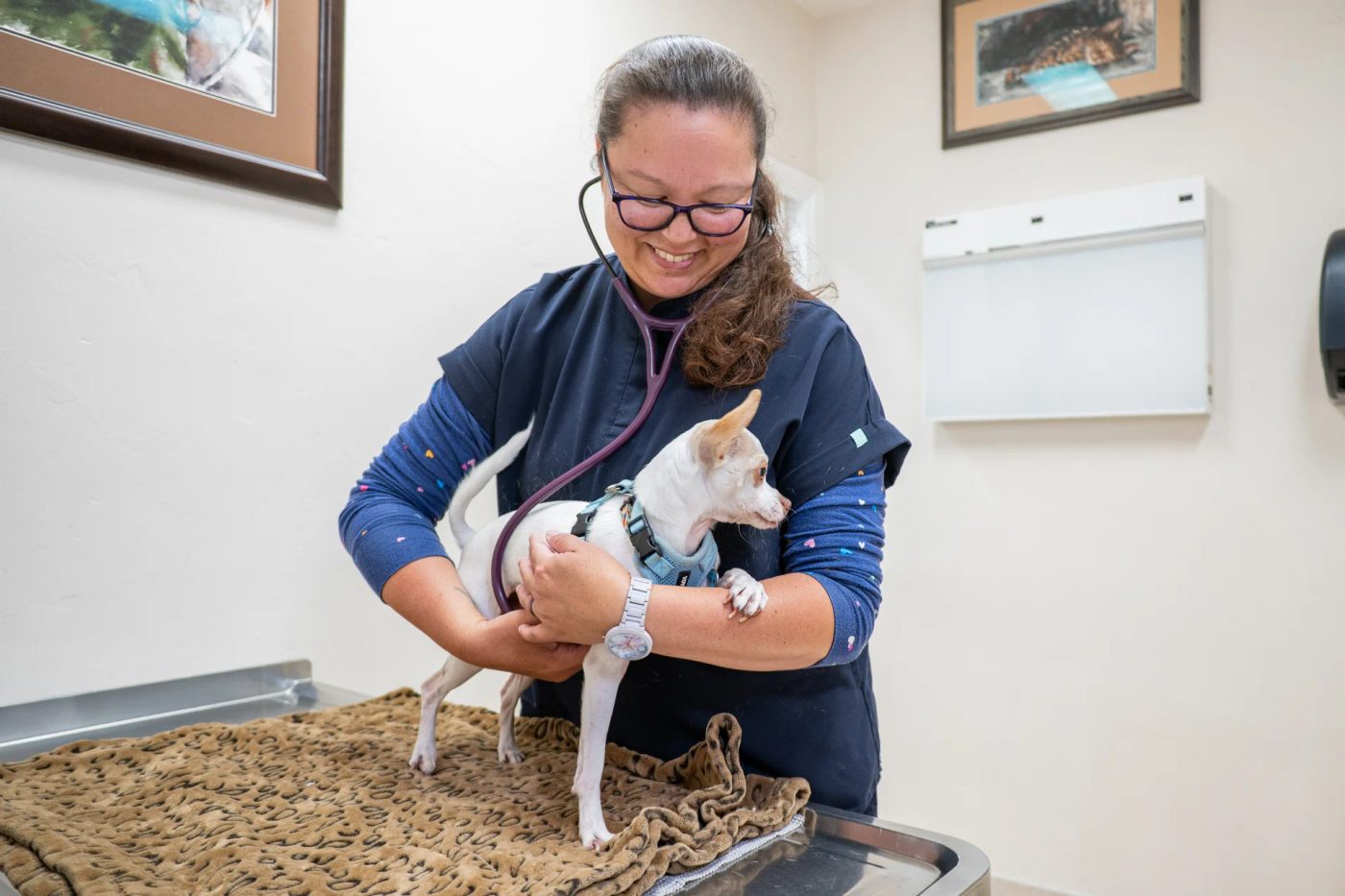
- Body and skin assessment — The vet palpates the abdomen, feels the spine and limbs, checks skin and coat for parasites, lumps, or hair loss, and listens to the heart and lungs with a stethoscope.
- Tail and rear exam — The tail, anal area, and genitalia are inspected for signs of infection, swelling, or discomfort.
- Recommendations and next steps — Based on findings, your vet will discuss vaccines, parasite prevention, dental care, nutrition, and whether blood work or other diagnostics are advised.




Beyond the Physical Exam: History, Vaccines, and More
A comprehensive exam for dogs includes more than the hands-on physical. Here is what else is typically covered:
- Medical history review — Your vet reviews past illnesses, surgeries, medications, and vaccine records to spot trends or gaps.
- Vaccination update — Core and lifestyle vaccines are given based on your dog's age, risk, and local guidelines. A tailored schedule is provided.
- Parasite prevention check — Fecal testing for intestinal parasites and a discussion of heartworm, flea, and tick prevention are standard.
- Dental health assessment — Teeth and gums are checked for tartar, gingivitis, and signs of dental disease. A dental care plan may be recommended.
- Nutrition and weight counseling — Diet, treats, and body condition are evaluated. If needed, a weight management or nutrition plan is offered.
- Behavior and lifestyle discussion — Changes in behavior, anxiety, or activity are addressed, along with tips for enrichment and safety.
Comprehensive Blood Tests: What They Look For and Why
A comprehensive blood test for dogs is often recommended alongside the physical exam, especially for senior pets or those with chronic conditions. It provides a deeper look at internal health. Here is what a typical panel covers:
| Test Category | What It Checks | Why It Matters |
|---|---|---|
| Complete Blood Count (CBC) | Red blood cells, white blood cells, platelets | Detects anemia, infection, inflammation, clotting disorders |
| Chemistry Panel | Kidney values (BUN, creatinine), liver enzymes (ALT, ALP), glucose, protein | Assesses organ function, metabolism, and hydration |
| Electrolytes | Sodium, potassium, chloride | Helps identify dehydration, kidney disease, or hormonal issues |
| Thyroid Function (T4) | Thyroid hormone level | Screens for hypothyroidism, a common condition in dogs |
| Heartworm Test | Antigen for heartworm | Essential in endemic areas; early detection is treatable |
Blood work results provide baseline values that your vet can compare year after year. Risks are minimal—just a quick needle stick—and results are typically available within minutes to a few hours. Ask your vet if a comprehensive blood test is right for your dog's age and health status.
What Exactly Is a Comprehensive Exam for Dogs?
A comprehensive exam for dogs is a routine medical checkup for a dog who appears healthy. It is not the same as a sick visit—it is preventive care designed to catch problems before they become serious. Here is how it differs from a problem-focused visit:
- Purpose — Preventive and proactive, not reactive to a specific symptom.
- Scope — Covers the whole body, history, and lifestyle, not just one complaint.
- Outcome — Establishes a health baseline, updates vaccines, and creates a wellness plan for the coming year.
Think of it as your dog's annual physical—similar to what you might have for yourself. At The Pet Hospital of La Mesa, we have been performing these exams since 1960, helping dogs in La Mesa, Spring Valley, Lemon Grove, El Cajon, and Santee stay healthy.
Directions to our veterinarian in La Mesa from Grossmont High School
Start at Grossmont High School and head to The Pet Hospital of La Mesa at 5336 Jackson Dr, La Mesa, CA 91942.
Why Regular Comprehensive Exams Matter for Your Dog
A good fit if…
- Your dog is due for annual vaccines or parasite prevention.
- You want to catch health issues early, when they are easier and less expensive to treat.
- Your dog is middle-aged or older—senior dogs benefit greatly from regular monitoring.
- You have noticed subtle changes like weight gain, thirst, or behavior shifts.
Consider another option if…
- Your dog is showing clear signs of illness (vomiting, diarrhea, limping)—a sick visit may be more appropriate first.
- You are on a tight budget and only need a specific vaccine or test—some clinics offer limited services.
Most dogs benefit from an annual comprehensive exam. If you are unsure, call our team at (619) 469-0138 to discuss your dog's specific needs.
How Often Should Your Dog Have a Comprehensive Exam?
A good fit if…
- Your dog is an adult (1–7 years) — once a year is the standard recommendation.
- Your dog is a puppy (under 1 year) — more frequent visits are needed for vaccines and growth monitoring, typically every 3–4 weeks until 16 weeks old.
- Your dog is a senior (7+ years) — twice-yearly exams are often advised to catch age-related changes early.
Consider another option if…
- Your dog has a chronic condition (diabetes, kidney disease) — your vet may recommend a tailored schedule.
- You recently adopted a dog — an initial comprehensive exam is a good idea, then follow the standard schedule.
Talk to your veterinarian at The Pet Hospital of La Mesa about the right frequency for your dog's age, breed, and health status.
How Much Does a Comprehensive Dog Exam Cost?
The cost of a comprehensive exam for dogs varies based on location, clinic type, and what is included. Here is a general breakdown of factors that influence price:
| Factor | Why It Matters | Typical Range |
|---|---|---|
| Physical exam fee | Covers the vet's time and expertise | Varies; ask for a quote |
| Vaccinations | Cost depends on which vaccines are due | Varies by vaccine type |
| Blood work | Comprehensive panels cost more than single tests | Varies; ask for a quote |
| Fecal test | Checks for intestinal parasites | Varies |
| Additional services | Dental, nutrition counseling, or deworming add to the total | Varies |
At The Pet Hospital of La Mesa, we offer a free first exam for new clients (terms apply). For a detailed estimate tailored to your dog, call us at (619) 469-0138.
Comprehensive Dog Exams in La Mesa, CA
If you live in La Mesa, Spring Valley, Lemon Grove, El Cajon, Santee, or the surrounding San Diego area, The Pet Hospital of La Mesa is here to help. We have been serving our community since 1960 and have over 375 5-star reviews.
- Call to schedule — Dial (619) 469-0138 during our hours: Monday–Friday 8 AM–6 PM, Saturday 9 AM–3 PM. We are closed Sunday.
- Visit our clinic — We are located at 5336 Jackson Dr, La Mesa, CA 91942, near Grossmont Center and Grossmont Transit Center.
- Bring your dog and any records — If you are a new client, mention the free first exam offer. Bring past vaccine records if available.
- Ask about payment options — We offer flexible payment plans. See our [[vet-pay|Vet Pay options]] for details.
We also offer [[pet-nutrition-counseling-grossmont|pet nutrition counseling]] and [[pet-boarding-mount-helix|pet boarding]] for your convenience. For emergencies, we provide emergency care—learn more about [[what-to-do-if-a-pet-has-an-emergency-at-night|what to do if a pet has an emergency at night]].
For details on services and visits, see the main page about veterinarian la mesa.
Sources
Also asked as
- What does a full wellness exam for dogs include?
- What is a routine physical exam for dogs?
- What happens during a dog's annual checkup?
Frequently asked questions
What is the silent killer in dogs?
Heartworm disease is often called a silent killer because dogs may show no symptoms until the infection is advanced. Annual testing and prevention are key. Other silent conditions include kidney disease and hypothyroidism, which is why comprehensive exams and blood work are so important.
What is a pet wellness exam?
A pet wellness exam is another name for a comprehensive exam. It is a preventive checkup for a healthy pet that includes a physical examination, history review, vaccinations, and often blood work. It is not the same as a sick visit, which focuses on a specific problem.
What does a comprehensive blood test look for?
A comprehensive blood test for dogs typically includes a complete blood count (CBC), chemistry panel, electrolytes, and thyroid function. It checks for anemia, infection, organ function (kidney, liver), hydration, and hormonal imbalances. It helps establish baseline values and detect hidden disease.
What are the risks of a comprehensive blood test?
The risks are very low. Your dog may feel a quick pinch from the needle, and a small bruise can form at the draw site. Serious complications are extremely rare. The benefits of early detection far outweigh the minimal risk.
What are red flags on a blood test?
Red flags include high or low white blood cell counts (infection or inflammation), elevated kidney or liver values (organ stress), abnormal red blood cell counts (anemia), and imbalanced electrolytes. Your vet will explain any abnormal results and recommend next steps.